
Awakening the Heart of our Collective Energy for Planetary Peace
The Global Conscious Food System Summit that took place in Bhutan from August 31st to September 4th brought together a flourishing community of world leaders connecting from heart to heart to regenerate food systems, enhance climate resilience and make peace with nature.
A shared vision: from poly-crisis to planetary peace
Humanity is navigating a convergence of crises—climate disruption, biodiversity collapse, geopolitical fragmentation, technological acceleration, and widening inequality. These systemic pressures reinforce one another, eroding social cohesion and amplifying conflict risks across regions.
Climate disruption is now one of the most powerful drivers of instability. Extreme weather, food and water insecurity, and climate‑related displacement are reshaping political and social dynamics worldwide. These impacts exacerbate existing grievances, strain governance systems, and heighten the risk of conflict — making climate change a central peace and security issue. The climate-related disaster that impacted Nepal and Tibet on August 26th 2027 has been unprecedented, in terms of scale, magnitude and impact, also triggering of wave of international solidarity. Yet it won’t be enough to bring back to life the thousands of people who disappeared. And the country is now struggling to find USD 7 billion to rebuild the valley that was destroyed by the flash flood, after a massive amount of rock and ice collapsed higher up in the Himalaya mountains. We can expect a strong push from all vulnerable countries towards the richer countries to address the major funding gap existing in the Loss and Damage set up by the UNFCCC to compensate the poorest countries with the resources needed to deal with a crisis that they have not caused themselves.
There will be no long-term peace without addressing the root causes of the climate crisis, which in the end is also a civilization crisis: a crisis of disconnection, loneliness and fear. We can only address it by nurturing compassion, by reconnecting to ourselves, to others and to nature in a more authentic way.
The Club of Rome’s report Planetary Peace for Human Security argues that traditional peace frameworks—rooted in post‑war, militarised, state‑centric paradigms—are no longer adequate. Today’s threats are ecological, transboundary, and deeply interconnected. Peace must be redefined as the presence of regenerative relationships between people, nature, and future generations.
This vision is also at the heart of the Global Conscious Food Systems Alliance that gathered its first Summit in Bhutan this month.
The report issues a global invitation: for organizations, networks, and communities working at the intersection of peace, regeneration, systems transformation, and ecological justice to co‑create a broader movement for Planetary Peace.
At Climate Bridges, we have decided to take this invitation very seriously. As a high-trust historical partner of the Club of Rome since our very beginning, when we facilitated and coordinated the Planetary Emergency Partnership, we have also been working very closely with the Conscious Food Systems Secretariat to prepare for the Summit in Bhutan. With our core team based in Switzerland, we have also become close to the Caux Foundation, a peace-building movement with a strong track record of successful mediations and historical reconciliations.
Together we strongly believe that a long-lasting peace depends on our capacity as humanity to find a new balance between People and the Planet, between human beings and nature, and finally to survive and thrive as One Living System, encompassing all species.
As we are now coming from the Global Conscious Food System Summit in Bhutan, we feel even more strongly about the importance and relevance of this initiative. We also would like to share here some of the highlights and learnings from this incredible collective journey.
Bhutan as a natural champion of planetary peace
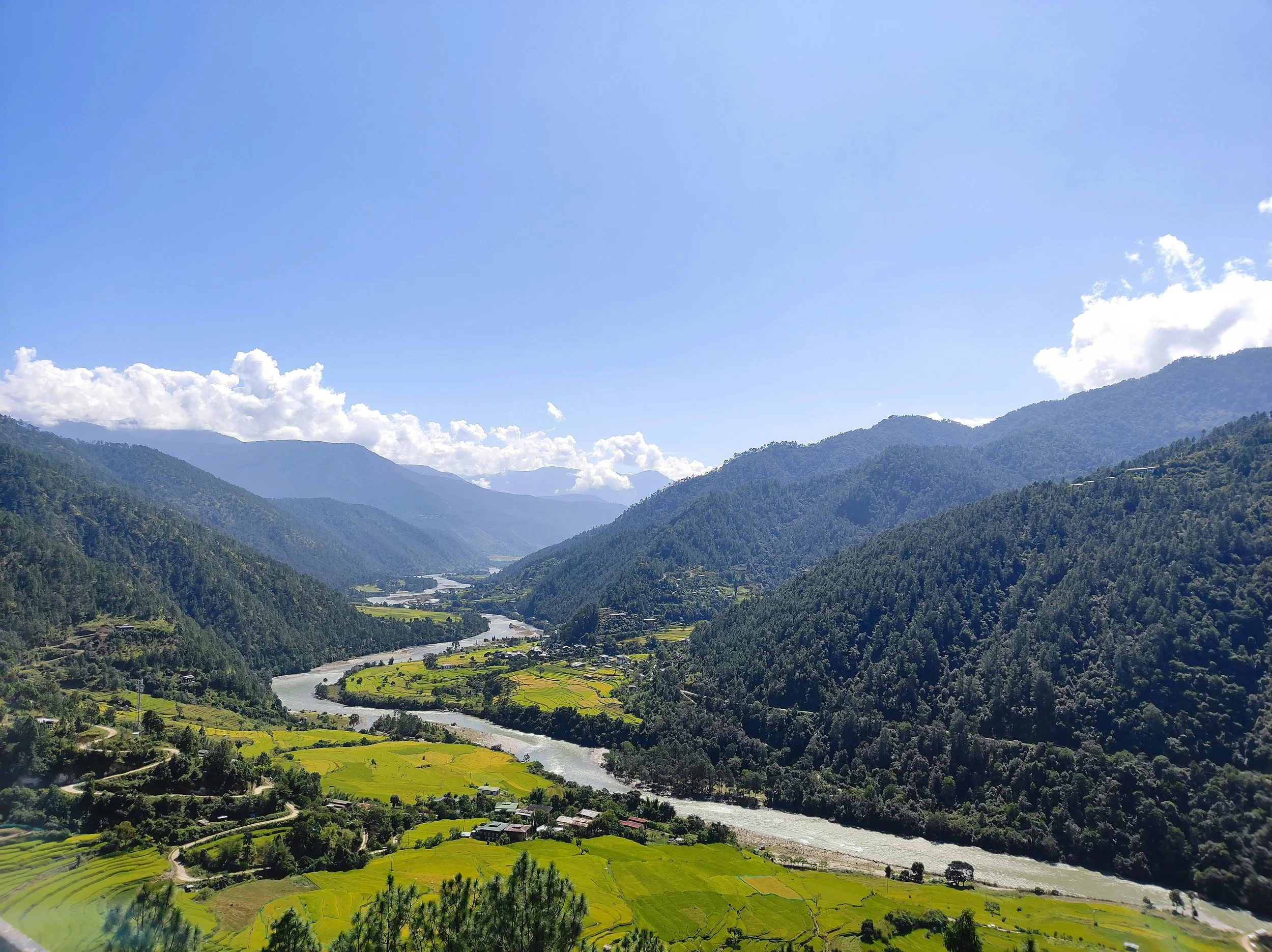
What would happen if all leaders followed the path of Bhutan ? We would probably be getting closer to universal planetary peace, with less islands of violence and war, and more solid and resilient Nation States interconnected through a vast web of global cooperation, solidarity and interconnected conscious leadership.
If all leaders followed Bhutan’s example, prioritizing well-being, nature and culture, over short-term GDP growth, the world would experience a profound shift towards ecological balance, community well-being and peace.
The Gross National Happiness (GNH) is the indicator used by Bhutan to truly measure progress, based on good governance, well-being, health, balanced time use, education, cultural diversity & resilience, community vitality, ecological diversity & resilience. When countries such as the USA focus almost solely on raw financial and economic outputs, we can witness the rise of social tensions, inequalities and polarization and sometimes political unrest.
Bhutan is also a climate champion. It has also enshrined in its Constitution the mandate to keep at least 60% of forested land. The country also exports hydro-power. In fact, Bhutan is one of the only countries (together with Panama, Surinam, Madagascar) in the world that is already beyond being carbon neutral, by absorbing five times more carbon than its economy is producing. The Prime Minister of Bhutan had made this pledge during various climate talks, and he was finally being heard and acknowledged when the Paris Agreement was agreed (listen to his TED Talk).
Bhutan truly values local traditions, arts and cultural heritage, over global commercial homogenization. If you have been to Bhutan, you will have seen the beautiful buildings and temples finely painted and decorated. The people of Bhutan proudly wear their traditional dress, may it be going to school or joining a ministerial meeting.
Last but not least, drawing from its Buddhist heritage, Bhutan actively fosters international unity and inner peace (see here the Prime Minister’s speech to the UN). Hosted in Thimphu, the capital, the Global Peace Prayer Festival unites diverse traditions, scholars and spiritual leaders to promote compassion and counter global divisions. Despite its small size, Bhutan contributes military and staff officers to the UN peacekeeping forces. The building of the Gelephu Mindfulness City also translates mindfulness and sustainability values into a physical and institutional reality.
Shedding the light on conscious leadership during the Opening the Summit
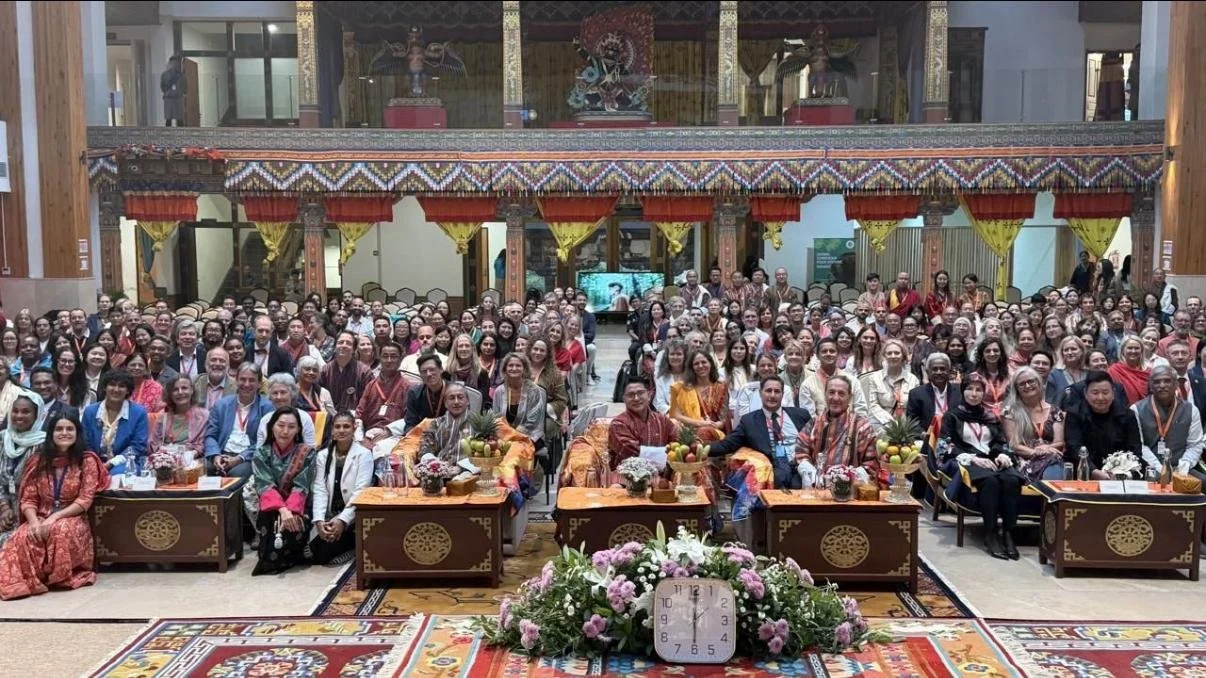
In this context, it is easy to understand why the UNDP team working as the Secretariat of the Global Conscious Food Systems Alliance has intentionally chosen Bhutan at the host of its first ever Summit. After almost two years of careful preparation, around 500 leaders came together, from 65 countries, uniting around a shared vision and practice for conscious food systems that truly value climate, people and nature. The first day took place in the very special venue of the Dungkar Dzong (a beautiful traditional palace serving as both regional council and spiritual center) above the city of Paro.
The opening plenary was so rich, and the venue so packed, that the amount of collective energy being shared and amplified in the room felt a bit unreal. It is not possible to capture the diversity and richness of all the inspiring speeches of wisdom we heard on that day. But here are some:
His Excellency, Prime Minister Tshering Tobgay invited us to "see the whole" embracing a new way of being, eating and acting to restore our relationship with nature. Together, with a shared understanding and new ideas to scale up, we can build bridges of partnerships to make a real difference as a community of practice.
With Ban Ki Moon and Jo Confino we expressed our deep concerns for the impacts caused by climate change, including in Nepal, and committed to co-creating a regenerative future for all beings on Earth. This is our shared responsibility to address climate change, restore nature and protect peace for our common humanity. For Otto Scharmer, everything starts with Mother Nature.
Her Excellency Mary Robinson, reminded us about our duties to the community, as per article 29 of the Universal Declaration of Human Rights. Women are the forefront of climate action and carry the seeds of hope, the way African slaves used to carry seeds for food sovereignty in their hair when crossing the Ocean.
Her Excellency Dr.Harini Amarasuriya, Prime Minister of Sri Lanka shared her humble advice with political leaders: all elected leaders must focus on their mandate, which is to serve the well-being of people and the planet.
In the afternoon, our proud member and leader Prasiddhi Singh ignited the whole audience with the power of youth to make everyone a change-maker, joining her in her commitment to plant millions of trees.
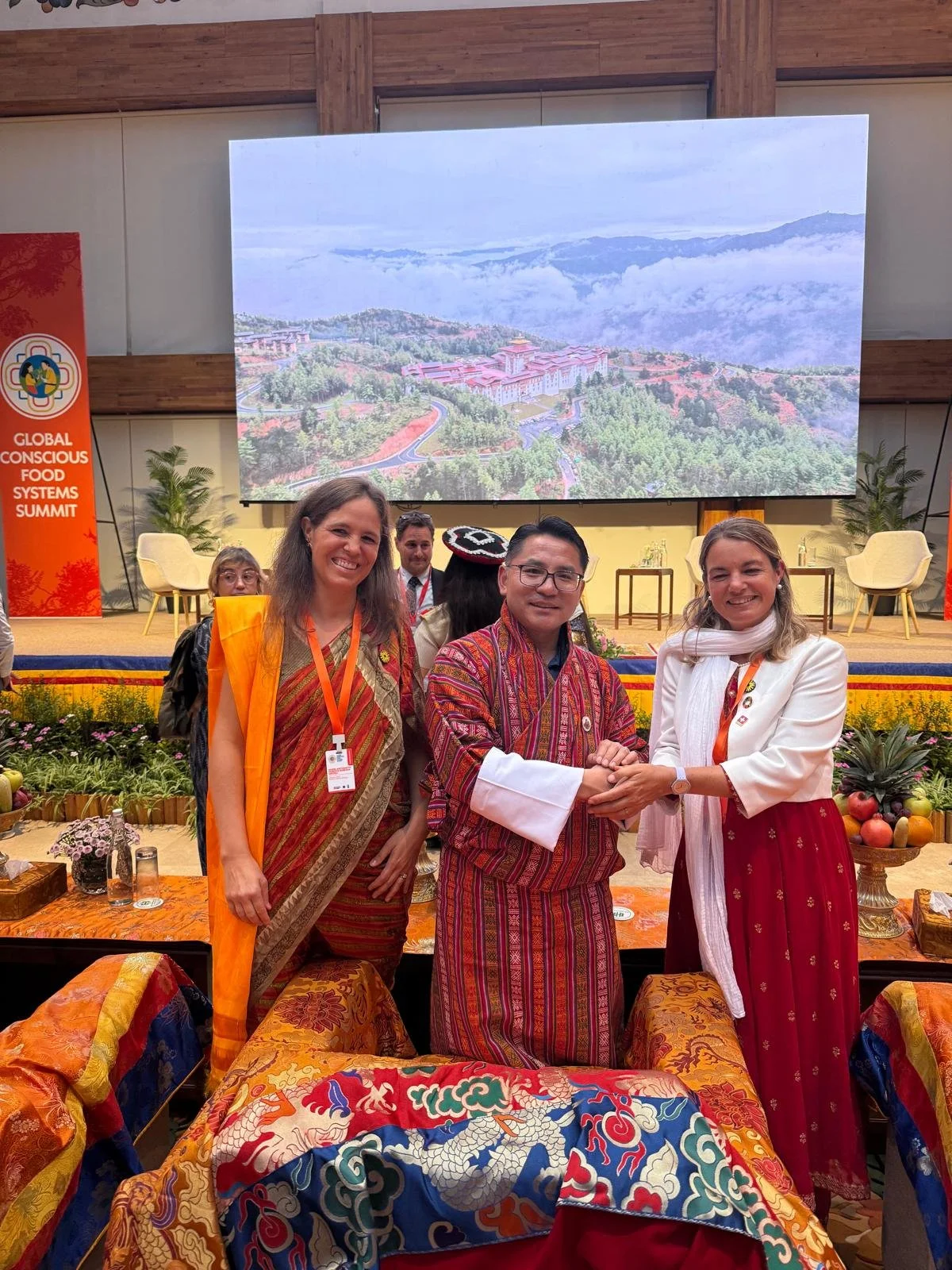
Finally, we were honoured to meet in person with the Minister of Agriculture of Bhutan, His Excellency Younten Phuntsho, who is already deeply committed to serving Planetary Peace through conscious leadership, global collaboration and food systems transformation.
Honouring the Earth and Women Farmers who are feeding us
The whole week was incredibly nourishing at all levels.
Together with our Board members and partners Marie-Antoinette Micheli Aoife Franklyn Jessica Bockler PhD Ignacio Packer, we hosted a special Trust Circle and made space to listen the learning of the Alef trust research regarding the true challenges and pain experienced by farmers, being disconnected from nature, and from themselves as a sensitive and sensing human being. We were also focused on centering and elevating the voices of women farmers.
Unfortunately, our Sister Farm partner Lilian Nakizogi could not attend the Summit, due to the restrictions imposed to Ebola affected neighbouring countries.
Her “sister” Marie-Antoinette was able to read the beautiful poem that she wrote, which I can read fully here: “What We Grow, Grows Us”.
We were also able to meet the new sister farm partner and woman leader Sonam Zam, a young entrepreneur inspiring a whole generation of change-makers in the country and beyond. Going to her apple farm up high in the mountains, drinking tea with her family and visiting her ancestral land also helped us to ground ourselves into the realities of food systems in Bhutan.
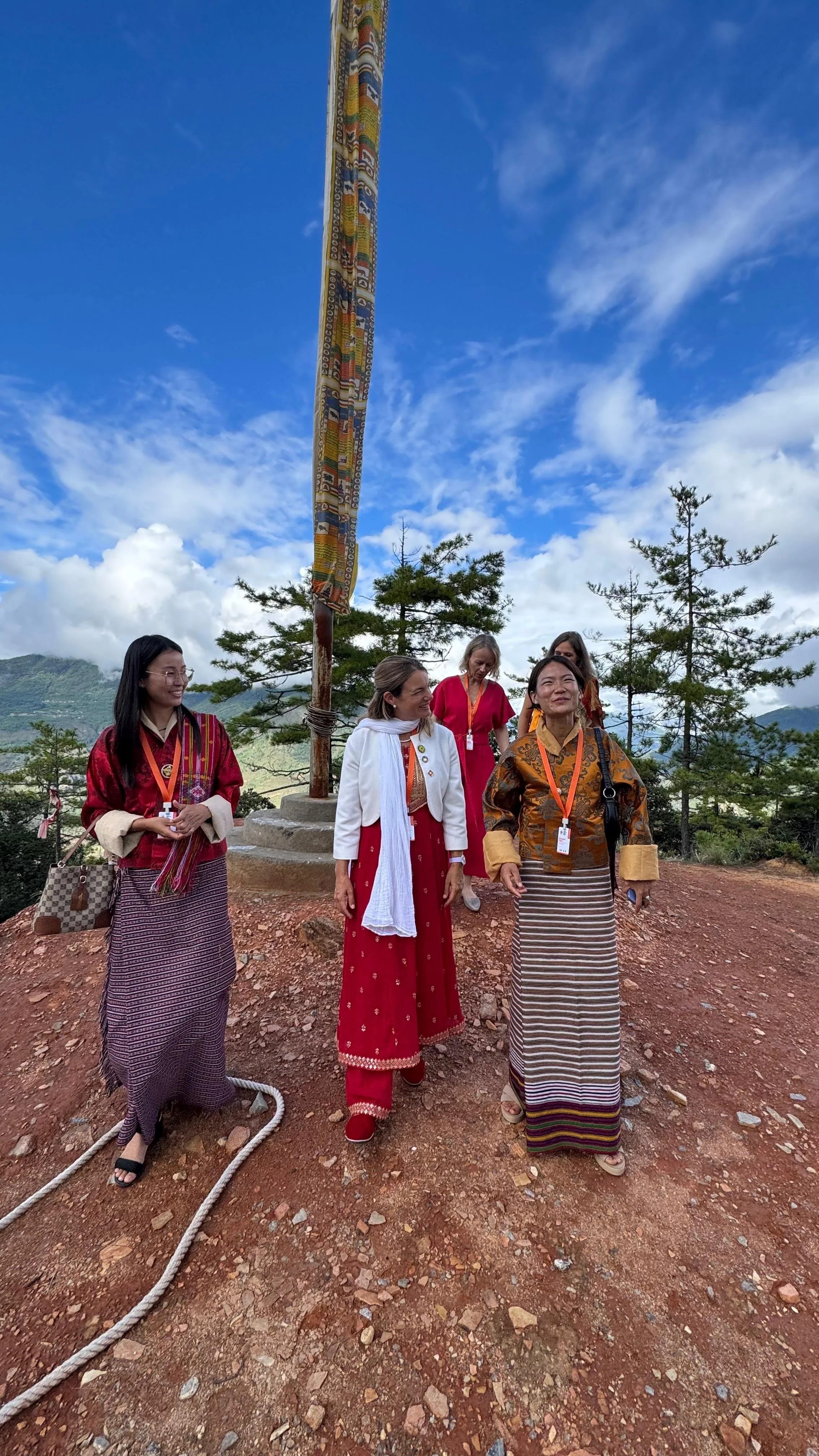
With the support of the CEO Sean Watson, we also visited a hazelnut tree farm, well taken care of by a grand-mother and her daughter.
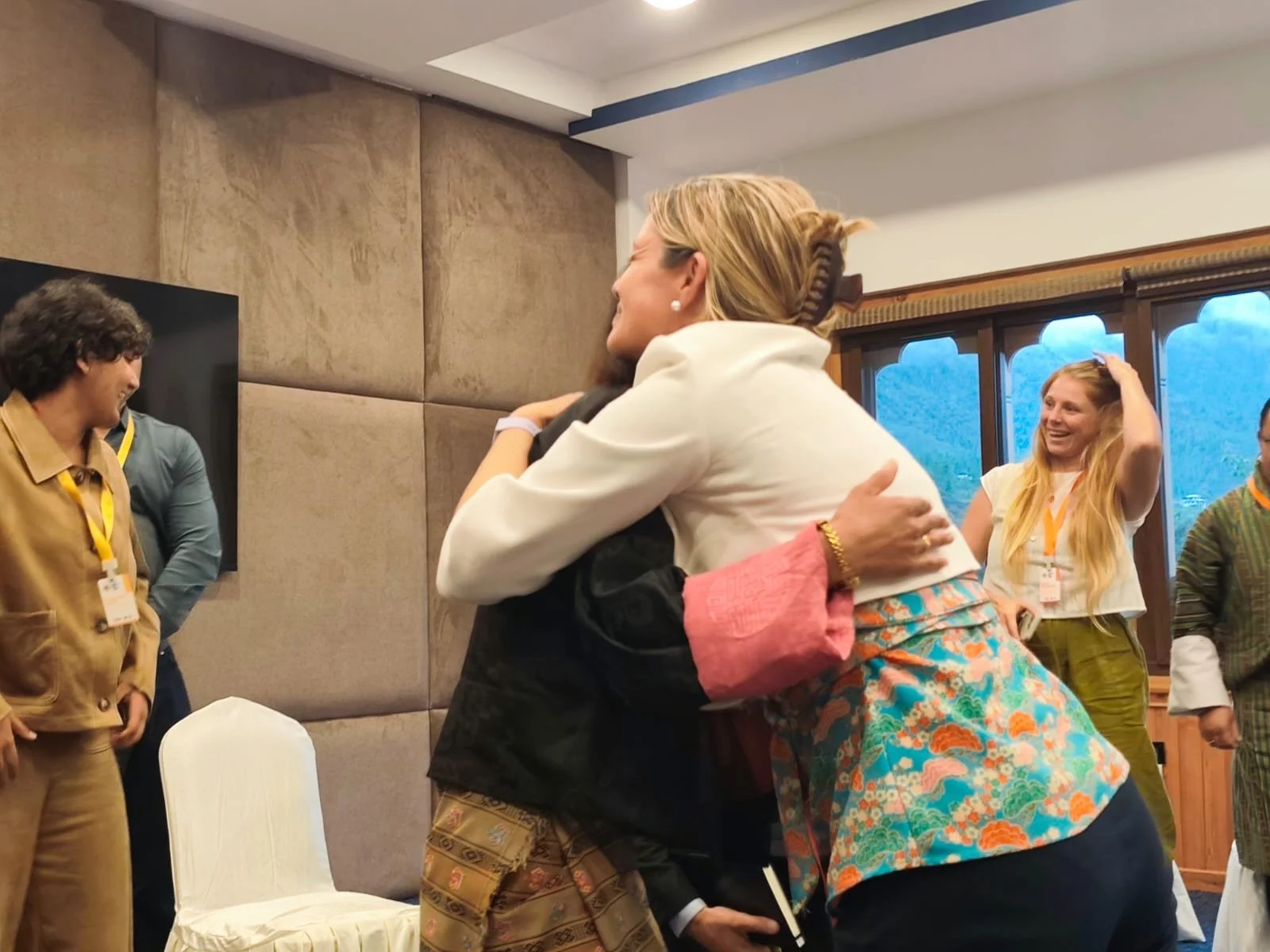
Later in the week, we were also invited to join a sense-making plenary session, a joint experience embodied by Dalmas Tiampati, Maasai Land and Community Steward from Kenya and Elise Buckle, Climate Bridges Founder from Switzerland and France. They stood up together on stage, holding hands and hugging each other to celebrate inclusion and diversity, and inviting the audience to do the same to overcome the crisis of separation, connect to our shared humanity and heal our relationship with the Earth. You can read the text written and shared for this occasion here: A Love Letter to Mother Earth.
A beacon of hope in the lead up to COP31
During the online regional dialogue sessions that Jessica Bockler and her team courageously hosted around the world and around the clock, people joining from North America shared their vision of Bhutan as a “Beacon of Hope” for the world.
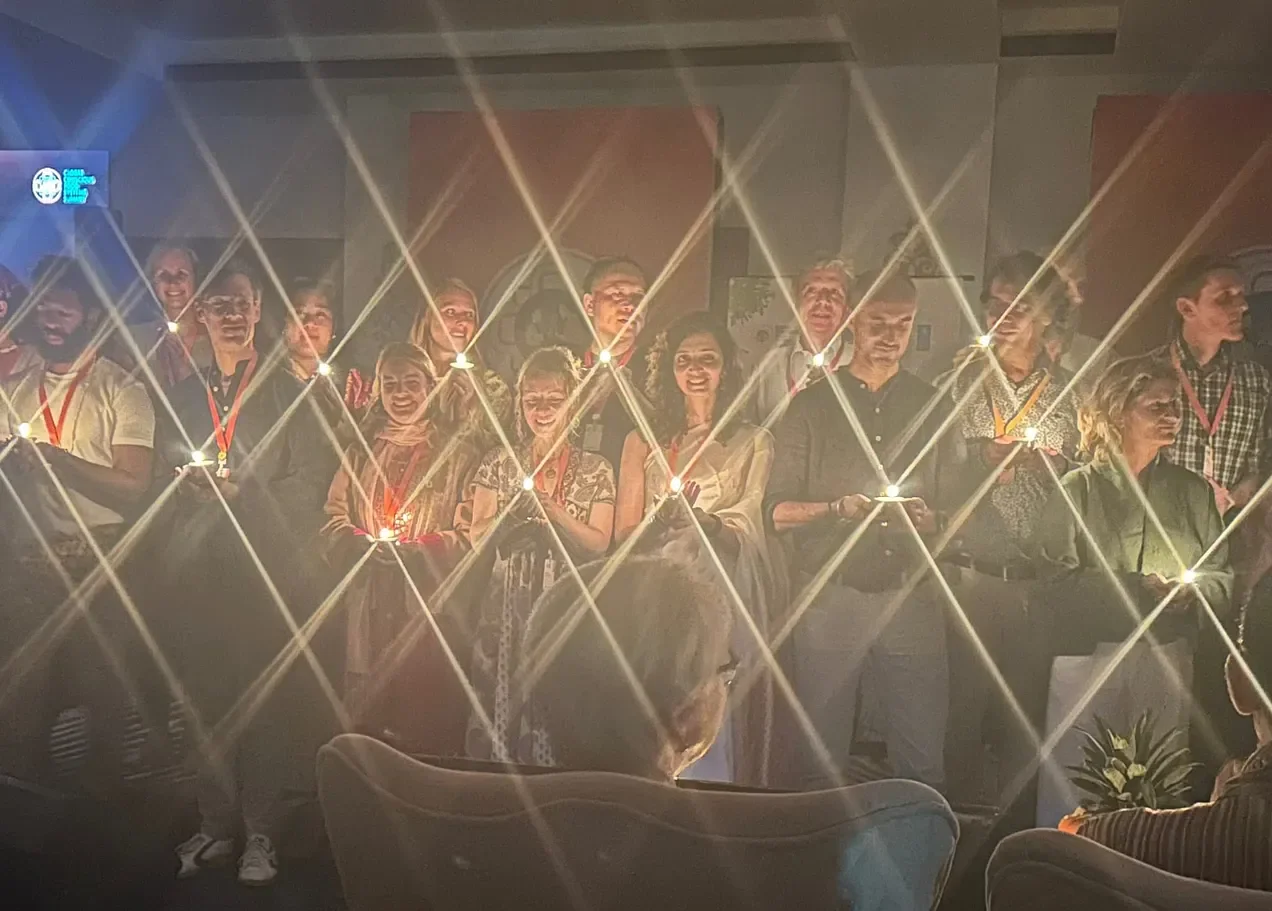
The closing ceremony of the Summit entitled “activating the heart of global conscious food systems” was truly moving, with the sharing circle facilitators being invited to lighten up and hold candles, as symbols of hope for the future, with blessings of rice and water truly resembling a global wedding.
It was a profound moment of collective awakening for global consciousness, connecting so many like-minded leaders uniting their hearts and dedicating their collective energy to the well-being of People and the Planet.
Now, what is next ? Our intention is to continue building this momentum, sharing the collective energy, knowledge and willingness to act, by building a bridge towards COP31. We will start by hosting a global online Trust Circle Dialogue on October 1st, together with the Weaving Lab, representatives of the Global Conscious Food Systems Alliance, the UNFCCC High-Level Champions Team and a broad diversity of voices, including women farmers and entrepreneurs from Asia, Africa and the Middle East.
Lightening up the path towards Planetary Peace
On October 13th, it will be a great honour to participate in the Geneva Peace Forum and start planting the seeds of the Planetary Peace Partnership. You are all welcome to join for a Special Event and address during the Peace Talks at 16:00 CET that day during which we announce the soft launch of the Partnership with the presence of the Club of Rome and the Caux Foundation Initiative of Change.
During COP31 in Turkey, we will activate our networks and high-trust relationships with government delegations and strategic partners to continue weaving the dialogue for planetary peace.
Last but not peace, we have already been committed to co-hosting the first Planetary Peace Summit and Forum in Switzerland around June 21st 2027, around the time of the next Summer Solstice.
You are all invited to join the collective journey and become an active agent of change as an Ambassador of Planetary Peace. You are welcome to become a High-trust Member of our network first here, or get in touch by writing to: contact@climate-bridges.org .
Finally, we would like to express our deep gratitude to the whole Conscious Food Systems Alliance UNDP Secretariat Team including Charlotte Dufour , Thomas Legrand, and Ashwini Prabha who were at the heart of the co-creation of this very special collective experience, and to our wonderful community of Core Team members, Board members and partners for their trust, guidance and support.